


Carousel Slides
American Nurses Association's Minority Fellowship Program (ANA MFP)

Principal Investigator | 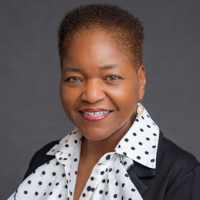
|
Mission
The SAMHSA ANA MFP develops nurse leaders who are building a stronger behavioral health workforce.
For over five decades, our fellows have expanded access to mental health and substance misuse care while leading change across clinical practice, education, policy, and research.
Advancing the Behavioral Health Workforce
How the Minority Fellowship Program Invests in Nursing Education, Leadership, and Community Impact
The United States faces a persistent behavioral health crisis, with rising rates of mental illness, substance use disorders, and suicide. Gaps in access to timely mental health care affect millions nationwide, undermining the well-being of individuals and families across the country. Nurses, who represent the largest and most trusted segment of the U.S. healthcare workforce, are uniquely positioned to help meet this need. Yet, only 6.5% of nurse practitioners are certified in psychiatric mental health, underscoring a critical workforce gap in behavioral health, particularly in the capacity to meet both mental health and substance use disorder treatment needs.[i]
Compounding this challenge, the U.S. healthcare system continues to face widespread provider shortages and burnout across the nursing profession. While demand for behavioral health services has sharply increased, the supply of trained mental health professionals has not kept pace.
The American Nurses Association's Minority Fellowship Program offers a proven, scalable solution. For over 50 years, the ANA MFP has been training advanced practice psychiatric mental health nurses, researchers and professors to serve in every corner of America, from rural and tribal areas to major urban centers. These leaders bring community-based behavioral health services to families in crisis and are prepared to meet the needs of an increasingly complex healthcare landscape. Today, our fellows and nearly 1000 alumni are on the front lines addressing America’s growing mental health and substance misuse crises, delivering care, preparing the next generation of behavioral healthcare providers, advancing research, and shaping policy that improves lives.
Data that Drives Our Mission
- 20.4 million adults in 2023 lived with both a mental illness and a substance use disorder (SUD).[ii]
- In 2023, 48.5 million people aged 12 or older (17.1%) had a past-year substance use disorder.
- 76% of those who needed substance misuse treatment received no care in 2023.[iii]
- In 2023, 22.8% of adults aged 18 or older—about 58.7 million people—experienced a mental illness in the past year.[iv]
- 76% of people (12+ years old) received no mental health treatment in 2023.[v]
- 43 of 44 states report behavioral health workforce shortages, with provider-to population ratios exceeding 350:1 in some regions.[vi]
The SAMHSA funded program administered in partnership with the ANA addresses these issues by enhancing nurses’ ability to deliver effective, patient-centered care, reducing provider shortages, and equipping them to lead in clinical, academic, and policy domains. It is a strategic, cost-effective investment in mental health and substance use disorder with national reach and measurable results.
Policy Context
The fellowship program is aligned with the Administration’s strategic plan 2023-2026 and Congress’ intent to seek actionable solutions to the behavioral health crisis. The program directly supports national priorities by:
- Preparing professionals with expertise in addiction treatment, suicide prevention, youth mental health, and crisis response
- Expanding the behavioral health workforce with trained nurses prepared to serve in high-need areas
- Building a sustainable pipeline of master’s and doctoral-level nurses to lead in clinical care, academia, research, and policy
- Driving job creation and economic growth through nurse-led enterprises
Program Overview
- Established Legacy: For 50+ years, the ANA MFP has produced generations of behavioral health nurse leaders.
- National Impact: Nearly 1,000 fellows driving change across clinical care, higher education and policy
- Federal Investment: Funded at $15.3M ($67.4M over five years across eight grantees), with ~$1.9M per grantee annually.
- Comprehensive Program Model: Full financial support, intensive mentorship, and leadership development
- Strategic Impact: Alumni address urgent issues from maternal mental health to dementia care, and opioid recovery to suicide prevention.
Urgency of Action
- All Americans—particularly in rural and other communities with limited access to health care services—face challenges accessing mental health care. A workforce that reflects the communities it serves is essential to delivering more responsive and patient-centered care.
- Congress has expressed bipartisan commitment to addressing the national mental health and substance misuse crisis.
- Research shows patients have better engagement and outcomes when treated by providers who understand their lived experiences.
Contact
Michelle Allender, MS, BSN, RN Project Director, ANA MFP | mfp@ana.org
Your donation empowers our mission! Select Minority Fellowship Program Fund under the ‘Designation’ tab to support the future of behavioral health nurses!
Sources
[i] 2022 AANP National Nurse Practitioner Workforce Survey
[ii] Substance Abuse and Mental Health Services Administration. Highlights for the 2023 National Survey on Drug Use and Health (NSDUH). Rockville, MD: SAMHSA, 2024. [Accessed November 6, 2025.] https://www.samhsa.gov/data/sites/default/files/NSDUH%202023%20Annual%20Release/2023-nsduh-main-highlights.pdf (opens new window) (Jump back to text.)
[iii] Substance Abuse and Mental Health Services Administration. (2024). 2023 Companion infographic report: Results from the 2021, 2022, and 2023 National Surveys on Drug Use and Health (SAMHSA Publication No. PEP24-07-020). Center for Behavioral Health Statistics and Quality, Substance Abuse and Mental Health Services Administration. https://www.samhsa.gov/data/report/2021-2022-2023-nsduh-infographic (opens new window)
[iv] Substance Abuse and Mental Health Services Administration, Highlights for the 2023 National Survey on Drug Use and Health.
[v] Substance Abuse and Mental Health Services Administration, 2023 Companion Infographic Report.
[vi] National Research Institute (NRI). 2024. State Behavioral Health Workforce Shortages & Initiatives: 2023-2024 State Profiles. Falls Church, VA: NRI. [Accessed November 6, 2025.] https://nri-inc.org/media/tghpz5uu/smha-workforce-shortages-2023.pd (opens new window)f